
NPS vs CSAT: How to Choose the Right Metric for SaaS Success

When building SaaS products, I have found that the difference between growth and churn often comes down to listening. Not just hearing numbers, but actually understanding what users mean by the score or feedback they leave behind. In an industry where switching costs drop and choices rise every quarter, knowing how your customers truly feel is not a matter of vanity—it's survival.
This is where the question appears for founders, product leaders, and small teams: should I rely on NPS or CSAT to track user sentiment? If you’re searching for the perfect answer, you might be surprised. There isn’t one. What matters is finding the right fit for your use case, your users, and your stage.
Understanding NPS: Beyond a Number
I’ll start with Net Promoter Score, or NPS. It asks a simple, sharp question: on a scale from 0 to 10, how likely are you to recommend this product to a friend or colleague? This score isn’t just a pat on the back. In my experience, it’s telling me how much trust we’ve earned. NPS scores bucket users into three groups:
- Promoters (9–10): These users love what you’ve built and won’t quietly leave if something small goes wrong.
- Passives (7–8): Satisfied, but they wouldn’t rush to tell their friends.
- Detractors (0–6): Unhappy and likely to churn—or worse, discourage others from trying your product.
The magic of NPS is seeing the strength of your user advocacy, not just their momentary happiness. NPS answers the “long-term loyalty” question. When NPS drops, something deeper is usually off, and the trend line over months is more telling than a week’s spike.
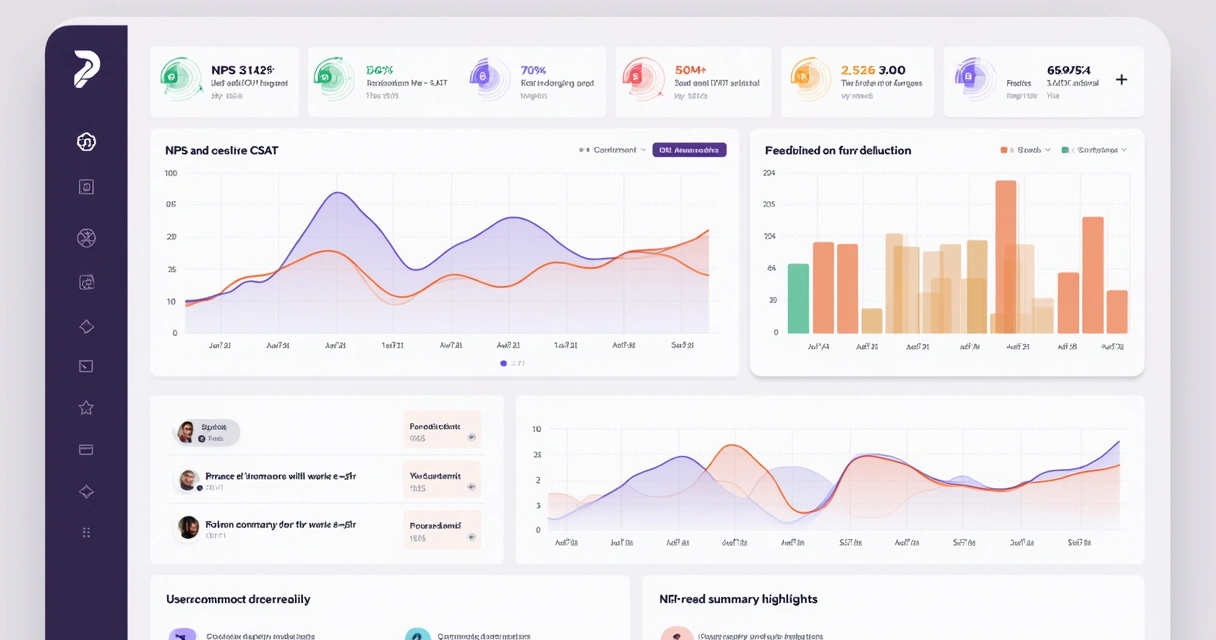 CSAT in context: The power of the present moment
On the other side, Customer Satisfaction (CSAT) is much more direct. It asks: how satisfied are you with your recent experience? This can come after support tickets are closed, after checkout, or even after using a new feature. CSAT feels almost like a pulse check at critical moments.
Unlike NPS, which aims for big-picture loyalty, CSAT is situational and specific—it’s less about long-term trust and more about immediate experience. If your SaaS just shipped a new integration, measuring CSAT after users try it gives you fast feedback on what’s working and what’s ignored.
- CSAT is usually measured on a 1–5, 1–10 scale, or sometimes with plain happy/neutral/sad faces.
- Higher participation rates (it’s quick, which means more users respond and less bias towards extremes).
- Better for monitoring support, feature success, onboarding, or any moment when the experience itself matters.
In my projects, especially for SaaS tools where onboarding friction means lost revenue, CSAT has told me exactly where we lose or delight people in flow.
NPS or CSAT? It depends on your SaaS story
I’ve been asked dozens of times: which metric matters more? Here’s the secret. You don’t actually have to choose one over the other. But you must choose the right metric for the right moment.
- Use NPS if you want to track loyalty trends, identify long-term risks, or benchmark your company against industry standards. NPS is the lens for the big picture—where your product stands in users’ minds over time.
- Use CSAT for transactional checkpoints—when you release new features, close support tickets, or want to validate user experience at discrete touchpoints.
NPS measures the heart. CSAT measures the mood.
If you want to create a user-centric product, focus both on long-term advocacy and short-term delight. Neither metric alone gives the full story.
 How I’ve seen SaaS leaders apply NPS and CSAT
In my years of working with SaaS founders, the ones who “knew before users left” almost always built habits around both metrics. They didn’t obsess over a single quarterly NPS. They layered in CSAT during tricky onboarding steps, after bug fixes, or new rollouts. Why? Because each score tells a different story. When NPS drops but CSAT remains high after support, it signals the problem lies in the product’s value, not support quality.
One small team collected NPS every three months, CSAT after each onboarding milestone, and combined those insights in their weekly meetings. This gave them the confidence to experiment, and the data to course-correct fast. If you want more inspiration on the analytical side, tracking trends and integrating insights into decision making can be a game changer.
Why Thrilled was built with both in mind
When I helped shape Thrilled, we focused on making these feedback tools truly accessible for SaaS builders. Not just collecting numbers, but giving meaning, action items, and clarity—without the weight or price tag of those “do everything” platforms. Both NPS and CSAT are core patterns in our widget. The whole idea was to put simple signals into the hands of teams before users leave quietly.
If you need NPS, it’s one script. If you want CSAT, the same product works for post-support feedback, feature launches, or onboarding journeys. Add AI-powered analysis and trend summaries, and you won’t just see what users said. You’ll understand what to do next.
For SaaS teams wanting to deepen their knowledge, the way you combine these metrics can heavily influence retention, as discussed in our guide to retention.
Integrating NPS and CSAT in practice
The best SaaS teams I’ve seen avoid “survey fatigue” by auto-scheduling NPS and using CSAT sparingly. With Thrilled, you can easily set schedules so users are prompted at just the right time – after real engagement, not at random. The Slack-native digest does the heavy lifting, grouping top insights (from both NPS and CSAT) into one actionable summary.
- Set NPS surveys on a cadence (quarterly, monthly, or after key product moments).
- Send CSAT surveys immediately after customer support, new feature use, or major events.
- Use AI summarization for quick clarity, not manual review of text walls.
Those building with Thrilled quickly notice the difference: fewer users leaving quietly, and a deeper understanding of what keeps people happy month after month.
Conclusion: Know before they go
In my experience, the best metric for SaaS success is not NPS or CSAT alone—but how well you listen and act on what each one uncovers. NPS brings the pulse of loyalty, CSAT shines a spotlight on daily experience. Blend both for a real-time, actionable picture of your users, and you’ll rarely be caught off guard.
If you want to see how simplifying feedback can transform your product’s growth, learn more about Thrilled and give it a try. Listening isn’t hard when you have the right tools, and your future users will thank you for it.
Frequently asked questions
What is the difference between NPS and CSAT?
NPS (Net Promoter Score) measures long-term user loyalty and advocacy by asking how likely someone is to recommend your product, while CSAT (Customer Satisfaction) measures satisfaction with a recent, specific experience. NPS tracks your position in the user’s mind over time; CSAT captures the mood right after an interaction.
How to choose between NPS and CSAT?
Choose NPS when your goal is to understand user loyalty, detect churn risk, and benchmark over longer periods. Choose CSAT when you want quick, granular feedback on specific features, interactions, or support moments. If you run a SaaS, you’ll often benefit by combining both strategically rather than picking just one.
When should I use NPS for SaaS?
Use NPS when you want to measure loyalty at key milestones—after onboarding, at subscription renewal, or on a recurring basis like quarterly. For SaaS, steady tracking with NPS gives you early warning signs of churn and a sense of overall user sentiment. Learn about user loyalty and analytics topics in our SaaS knowledge base.
Is CSAT or NPS better for SaaS?
Neither metric is universally "better"—each answers a different question. NPS gives you the pulse of loyalty, while CSAT pinpoints satisfaction at critical touchpoints. For most SaaS companies, the best approach is to use both: NPS for quarterly health and CSAT for in-the-moment improvements, as I often discuss with fellow product builders.
Can I use NPS and CSAT together?
Absolutely. Combining NPS and CSAT helps you capture both long-term loyalty and immediate user experiences, creating a full picture of what drives user happiness and retention. This is the approach I see successful SaaS founders use, and it’s fully supported by solutions like Thrilled. For a deeper dive into customer insights, check out my favorite post on effective feedback strategies.