
What investors really want to see in your user feedback

In my experience talking to founders and seeing product teams pitch, I can tell you: nothing sparks an investor’s interest like hearing how real users interact with your product. They ask how you measure satisfaction. They want to know how people felt using your SaaS last week, not last quarter. They’re looking for signals that you’re not just building, but actually listening.
But what do they actually want to see in your user feedback? Are they searching for fluffy testimonials, or tough love that’s pushing you to fix hard problems? Over time, and with the help of platforms like Thrilled, I’ve developed a sharp sense of what makes feedback meaningful in the eyes of a potential investor.
Why user feedback matters to investors
Investors have a radar for risk. When you bring them user feedback, you give them the kind of radar data they crave: evidence that people really care about what you’re building. They don’t just want to see a high-level Net Promoter Score (NPS); they want to see the stories and themes beneath that number.
User feedback is proof that there’s a living, breathing conversation between you and your market.
Raw metrics feel hollow on their own. A chart without commentary is just noise. But detailed, honest feedback? That’s signal. When I talk about Thrilled with other founders, I always highlight our mission: give every SaaS builder a real-time pulse on what users think, feel, and need, because that’s the pulse investors will check too.
What kind of feedback stands out?
In every investor meeting I’ve attended, a handful of qualities in feedback always seemed to stand out, even when the numbers weren’t perfect.
- Specificity: Vague praise is brushed aside. “Love the product” means little. “I wish I could filter reports by date” is gold. Specific requests show product-market fit is maturing.
- Patterns: When multiple users mention the same pain point, investors perk up. They’re looking for clear themes, not just outlier complaints.
- Urgency: Feedback with a sense of “must-have now” – like broken billing or hidden bugs – points to real stakes. Surfacing urgency, the way Thrilled does, helps you act and show investors you’re solving the most pressing issues.
- Balance: Oddly, a mix of promoters, passives, and detractors is healthy. All promoters looks suspicious. Feedback that’s critical, but constructive, reassures investors that your data is real.
- Trend over time: Static quotes are less convincing than a visible improvement in NPS or satisfaction scores, plus commentary about what changed between the dips and spikes.
I’ve seen SaaS founders win confidence from investors not with perfect scores but with evidence that they’re honest about the problems, and that they’re closing the loop quickly.

How to present user feedback to investors
Investors see hundreds of dashboards and reports. If you want yours to hit home, I recommend focusing on three principles:
- Lead with clarity. Start with your NPS and a quick summary of the most-reported themes. Don’t flood the room with every comment, give them the lay of the land first. For example, a well-designed weekly digest like the one Thrilled provides might show:
- NPS: 47 (up 5 from last week)
- Responses: 34
- Top category: Feature Requests (41%)
- A few notable verbatim comments
- Three AI-suggested action items
- Highlight what you did about it. Investors want to understand that this feedback leads to real change. If billing reliability was a pain point last week, show how you responded and if satisfaction increased afterward.
- Share trends and momentum. A single survey is a snapshot. A rolling trend shows your learning loop in action. When founders present both “what changed” and “why,” it builds trust and excitement.
If there’s one thing I’ve learned, it’s that you don’t earn trust by hiding negative feedback. Investors respect builders who embrace the tough comments and use them as a lever for product improvement.
What does “investor-ready” feedback look like?
I often see founders default to plain NPS dashboards, missing the bigger picture. An investor-ready feedback report weaves numbers, context, and fixes together. Here’s what I try to present:
- Charts that tell a story, not just numbers. Think visual NPS trends mapped against recent changes you’ve shipped.
- Themes surfaced by AI. For example, categorizing feedback into themes like “onboarding,” “billing,” “features.” Thrilled’s AI actually summarizes what’s most urgent, so you don’t have to guess.
- Quotes that illuminate. One or two sharp, insightful user comments can say more than a spreadsheet of scores.
- Clear action items. Short bullet points that show how you’re closing the loop, not just what went wrong.
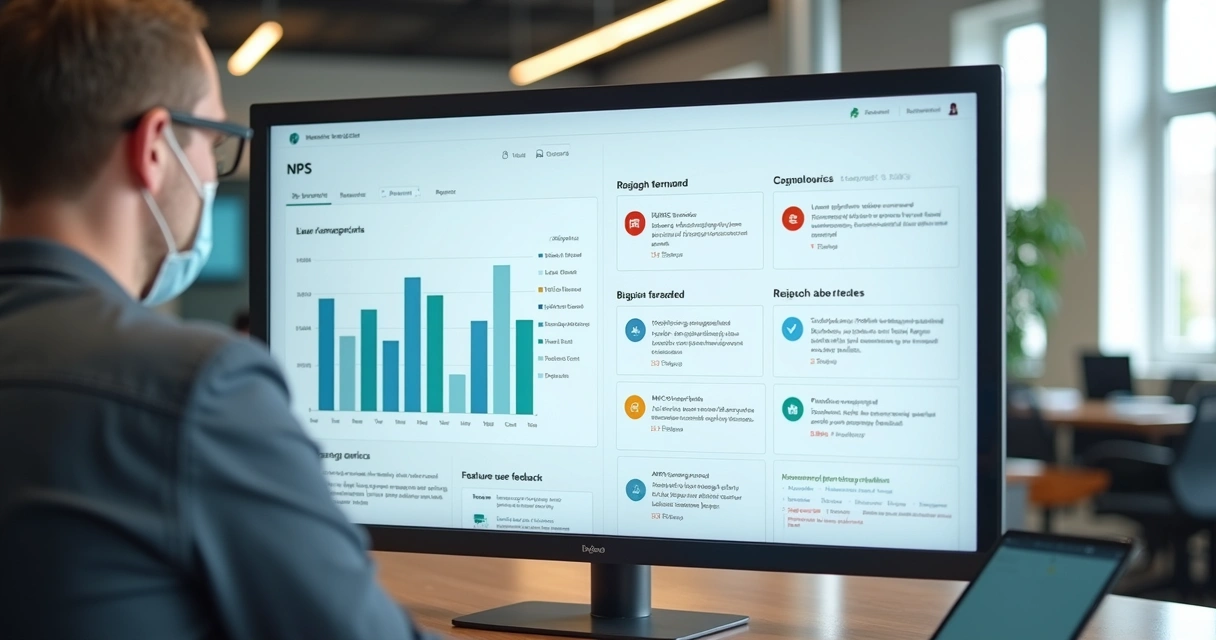
In my research, I noticed investors react best when founders point out the biggest change since last quarter, and the user feedback that triggered it. This ties your listening habits to product improvement and business outcomes.
Best ways to collect and analyze feedback for investor reporting
Investors don’t just want to see that you’re collecting feedback. They want to know you’re doing it with discipline and consistency. Here’s how I approach this process:
- I keep feedback collection lightweight and ever-present in the product using embedded surveys, like the single script tag recommended by Thrilled.
- Feedback is routed to key team members, so issues don’t sleep in a dashboard no one checks. Slack digests keep everyone in the loop, not just founders.
- I segment feedback (by user type, plan, etc.) to find out where change matters most, supporting more detailed discussions with investors.
- I prioritize responses by urgency and trend, not just volume, so the signal rises above the noise.
I believe a disciplined approach wins hearts and minds. If you want deeper strategies on this topic, you might enjoy reading more on user analytics for SaaS or diving into user retention tactics.
Common mistakes I’ve seen founders make
Sometimes, founders unintentionally cause investors to lose trust by:
- Cherry-picking only the most positive comments.
- Bringing feedback without context or specifics—quotes with no categories or action plans.
- Showing data too old to be relevant (“Here’s a survey from last year”).
- Failing to act on feedback between rounds, improvements matter more than one-time NPS spikes.
Real feedback is messy but meaningful. Perfect 10s aren’t proof of progress.
For more on how customer experience drives real growth for SaaS founders, I’ve enjoyed the articles in the customer experience blog section and practical insight from case study posts as well.
Conclusion
After two decades in this industry, I can say with confidence: investors see user feedback as a window into the soul of your product. If you surface real signals, act on them quickly, and present your learning process clearly, you stand out, even when your NPS isn’t at 100. If you’d like to see how Thrilled helps SaaS builders of any size collect and present feedback the right way, I invite you to learn more about our tools and try them for yourself. You might find your next investor likes what they see.
Frequently asked questions
What is user feedback for investors?
User feedback for investors is the collection of authentic responses, scores, and comments from real users that reflect how they interact with a product, what they like, and what needs change. Investors view this feedback as direct proof of user engagement, product-market fit, and your openness as a founder to listen and iterate.
How to present user feedback to investors?
Present user feedback using a combination of clear metrics (like NPS), visual charts that show trends, categorized themes, and select real user quotes. Always explain what actions you have taken based on this feedback, and use simple, concise summaries to communicate momentum and learning. Transparency about both positives and negatives enhances credibility.
Why do investors value user feedback?
Investors value user feedback because it provides early warning signs, identifies opportunities for growth, and proves there’s demand beyond your own assumptions. Feedback shows how well you know your market and whether your product is built to solve real problems. Investors are reassured when founders use feedback loops to drive continuous improvement.
What user feedback impresses investors most?
The feedback that impresses investors most includes specific, actionable insights, patterns or recurring pain points across users, urgency scoring, and evidence of improvement over time. Balanced feedback showing both praise and valid criticism looks more realistic and helps investors trust your numbers.
How often should I collect user feedback?
I recommend collecting user feedback continuously, not just before fundraising, by embedding simple surveys or tools into your product. Frequent feedback lets you spot trends as they develop and share timely, relevant data with investors. Tools like Thrilled let you automate weekly digests, so feedback is always up to date and actionable.