
Ten mistakes SaaS founders make with user feedback loops

As someone who’s spent two decades working with early-stage SaaS teams, I’ve watched user feedback loops either push products to new heights or quietly drag growth to a halt. The difference rarely comes down to passion or work ethic. Usually, it’s what’s missing or misused in the feedback process itself that changes the outcome.Here are the ten most common mistakes I see (and the warning signs I listen for) when SaaS founders set out to build better feedback loops.
1. Making feedback too hard to give
User feedback loops only work when feedback is easy, frictionless, and right where the user already is. Years back, I watched a product that buried its feedback channel three clicks deep in a settings menu—guess how many responses they averaged? Near zero. That’s not silence, that’s a dead channel.
I believe a lightweight approach is critical. With Thrilled, founders can drop in a single script tag to collect Net Promoter Score (NPS) and open-text insights, right inside their app, without forcing their users to hunt for a feedback button or leave their workflow.
2. Treating feedback as “nice to have”
Many founders think feedback is a side quest—a feature for “when we have time.” Feedback is the only thing that cuts through internal guesswork. When it’s optional or added late, decisions slow down and product-market fit drifts further away.
Blockquote:
Real-time feedback is your alignment engine.
3. Relying only on numerical scores
Scores are simple to trend, but they’re empty without context. I often see “our NPS dropped by 12 points” become the headline, while the why behind the drop goes unread. Thrilled’s AI helps surface the trends, urgency, and underlying reasons, so you’re not just looking at a number—you’re hearing the story.
- Don’t just track “promoter” and “detractor” counts—analyze open comments for patterns.
- Use automated summaries to catch urgency signals you might otherwise overlook.
4. Sending feedback into a black hole
Users notice when feedback goes into the void. If there’s no reply, upgrade, or even acknowledgment, users stop caring—and so do teams. In my experience, even a quick Slack alert to a team channel acknowledging feedback can create a sense of momentum.Thrilled’s Slack integration keeps feedback visible, actionable, and prevents the dreaded “black hole” effect.
5. Over-surveying and causing fatigue
The best SaaS feedback loops are respectful of user attention and ask just enough, never more. There’s a fine line between being attentive and being annoying. If users see survey modals every week, trust and engagement crash. I always recommend smart scheduling—Thrilled, for example, automatically respects cooling-off periods and only prompts when the timing fits the user’s journey.
6. Ignoring feedback from “silent” users
The squeaky wheel always gets the grease, but the silent ones who leave without a word are the real risk. I’ve seen countless SaaS products chase feature requests from power users while missing churn signals from quiet, unhappy customers.
Techniques like NPS sampling and strategic in-app prompts help reach the silent majority—something at the core of Thrilled’s mission.
7. Biasing feedback collection toward happy paths
If your prompts only show up after a user achieves “success,” you miss pain points during friction. Years ago, I shadowed a support team that only asked for feedback after issue resolution. They learned nothing about failed onboarding or abandoned flows.
- Randomize prompt timing to catch true user emotions.
- Don’t rely only on post-conversion surveys—ask during drop-offs too.
8. Overcomplicating setup or analysis
Most teams don’t need a complicated setup to get signals that matter. I’ve helped teams migrate from lumbering dashboards to “one script, done” solutions like Thrilled, and the relief is palpable. Simplicity keeps you agile and responsive.Every extra step or config required to launch feedback is a minute you’re not learning.
9. Forgetting to close the loop
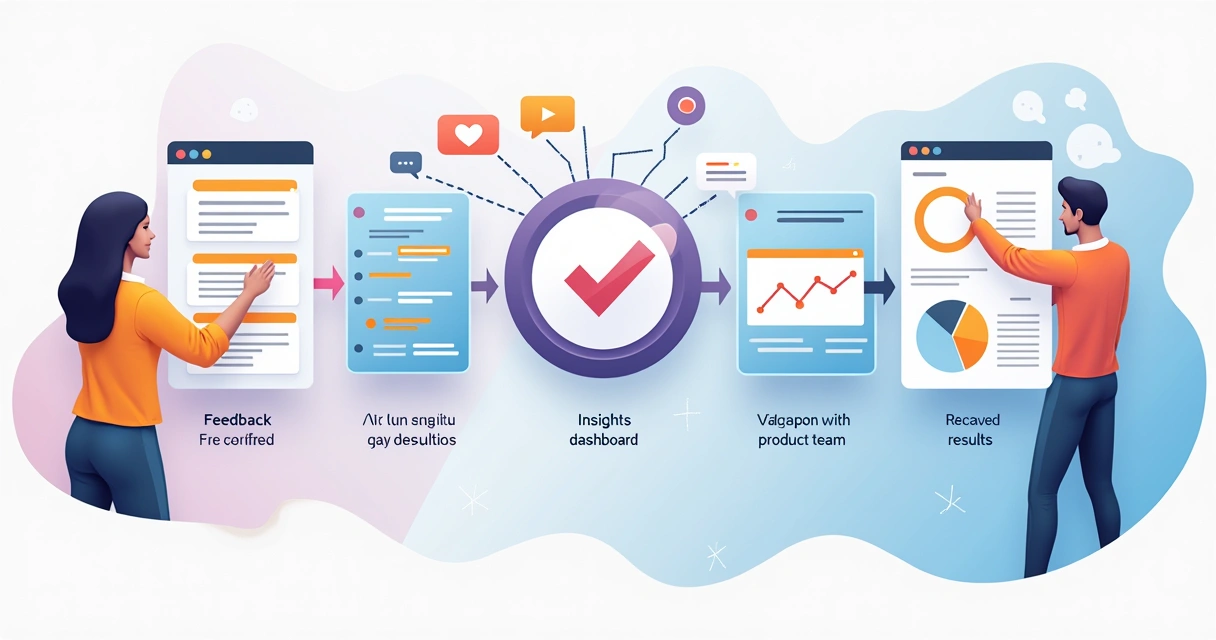
Feedback is a cycle, not a dump. If users see fixes, features, or updates inspired by their input, loyalty grows. Too many teams collect, analyze, decide—and forget to tell users what changed.Announce what you’ve changed based on feedback in-app, via email, or in product changelogs. Transparency builds trust. In the end, users want to know they were heard.

10. Measuring the wrong things
NPS is a signal, not the finish line. If all you do is chase your NPS score without connecting user input to clear product improvements and outcomes, you’re running in circles.Focus on actionable categories: UX friction, feature requests, bug reports, and loyalty signals. Tools like Thrilled help break down responses into real insights that can guide the roadmap, not just decorate a dashboard.
Conclusion
Staying close to users requires fewer guesses and more genuine signals. In my experience, the best SaaS founders don’t chase every trend—they build simple, respectful feedback loops and act on what they learn. That’s what Thrilled is built for: making high-quality, actionable feedback available to every SaaS founder—without delay, and without the need for an enterprise budget.
If you’re curious how real-time feedback can shape your growth, check out our guides on SaaS, customer experience, and user retention. Ready to feel the difference for yourself? See how you can get started with Thrilled in minutes.
Frequently asked questions
What is a user feedback loop?
A user feedback loop is a continuous process where user input is collected, analyzed, and used to inform decisions that improve the product or service. The loop closes when users can see their feedback has driven an actual change. With tools like Thrilled, the entire process can happen in real time and inside the product itself, so insights never get lost or delayed.
How to collect user feedback effectively?
To collect feedback effectively, I always recommend making the process as easy and unobtrusive as possible. In-app prompts, clear survey questions (like NPS), and allowing open-text comments all help increase the volume and quality of feedback. It’s also key to give feedback at the right moment and avoid survey fatigue. Tools that automate timing and minimize steps, like dropping in a script tag, are ideal for SaaS teams.
What are common feedback loop mistakes?
Some typical mistakes I see include overcomplicating the process, ignoring negative or silent users, focusing only on scores instead of context, and failing to act on the input received. Another is bombarding users with too many requests. The core principle should be: keep feedback simple, timely, and always actionable.
How can I avoid feedback bias?
Feedback bias happens when you only collect input in the “happy path” or after success events, missing user frustrations and blockages. To avoid this, randomize when you ask, prompt during different stages, and ensure all users—not just power users—have a voice. Mixing quantitative scores with qualitative comments reveals the whole story.
When should I act on user feedback?
The right time to act is as soon as you can spot a clear pattern or urgent issue, especially if it threatens retention or conversion. Quick, visible actions (even small bug fixes) show users they are heard. For roadmap-level changes, build habits of reviewing feedback weekly and sharing what’s being addressed—with Thrilled’s Slack digests, that’s built in.